Product documentation
Tarantool Data Grid
A master data solution built on an ultra-fast in-memory database with a built-in application server.
My roleSenior Technical Writer, Tarantool team, Mail.Ru Group (later VK)
Product summary
Tarantool Data Grid stores complex business objects and supports real-time queries across them. Its documentation connects the developer’s view of a domain model with the operator’s view of a running cluster.
It’s built on Tarantool DBMS: an in-memory database made for ultra-low latency with a built-in application server, programmed with Lua.
The documentation set includes an application development guide, an operations guide and reference material for requests from external systems. This entry presents Russian-language samples from release 1.0, dated 2 November 2020; the current documentation linked above describes a newer version.
My involvement
I joined the Tarantool team at Mail.Ru Group, later renamed VK, in 2019 as a Senior Technical Writer. I wrote documentation in English and managed localisation for Russian. My work on Tarantool preceded my move into documentation team leadership for Private Cloud in 2020.
During this period, I also managed documentation for the security certification of this product, which successfully passed a security audit.
The samples here show the developer and administrator material from that period, rather than the substantially newer documentation now available on the product website.
Main challenges
The documentation needed to connect developers’ concepts with the controls and procedures used to operate a cluster. Its scope spans domain modelling, execution environments, APIs and testing, as well as installation, cluster configuration, security, logging and metrics.
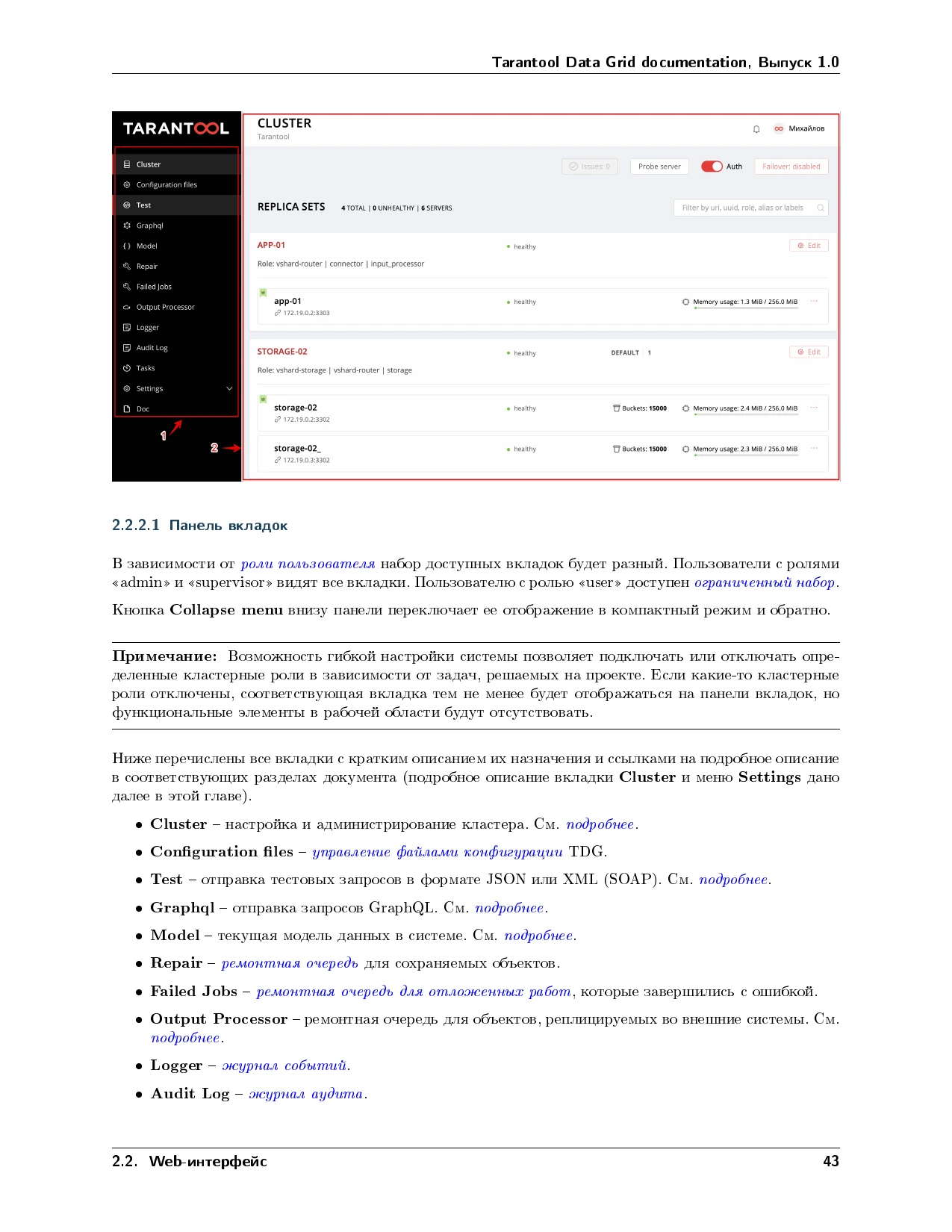
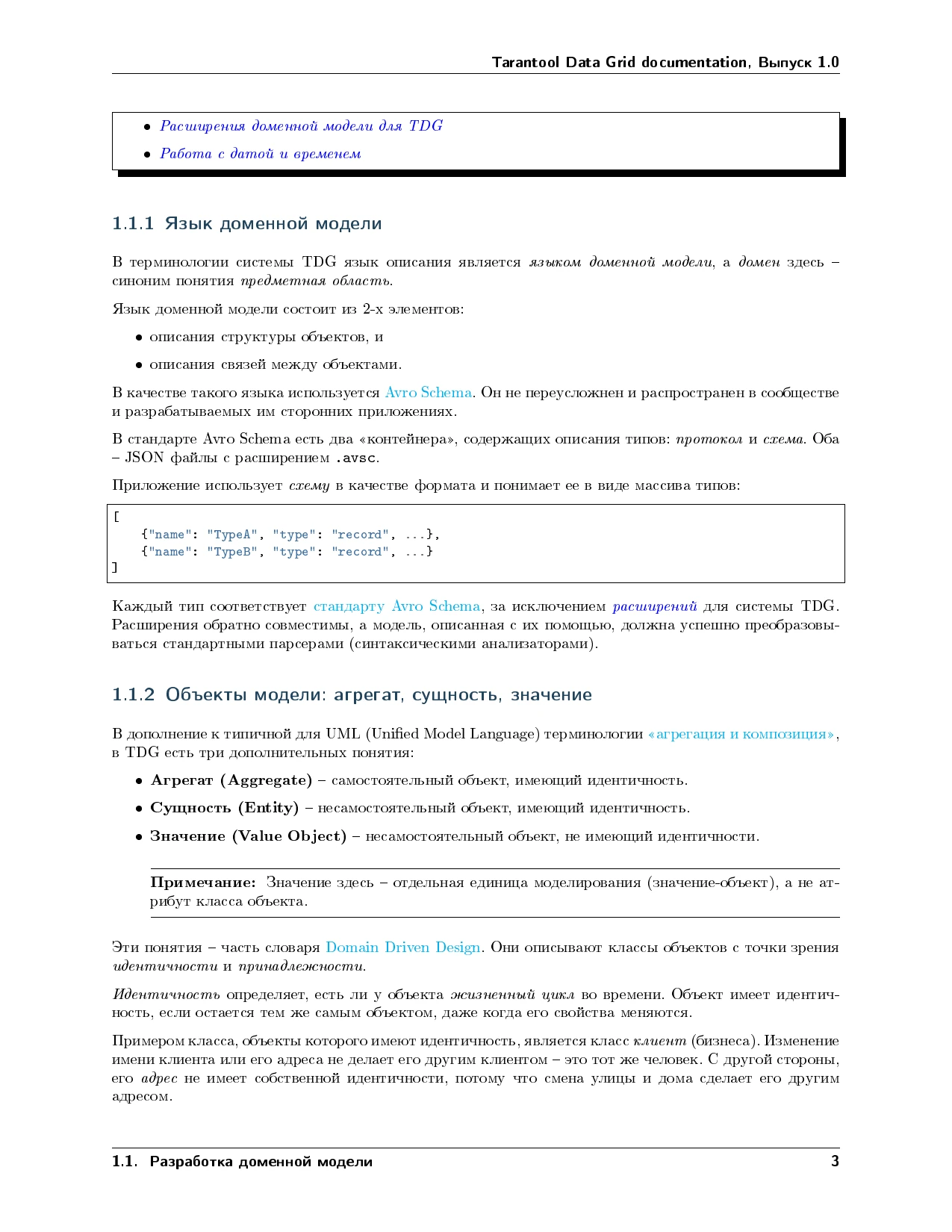
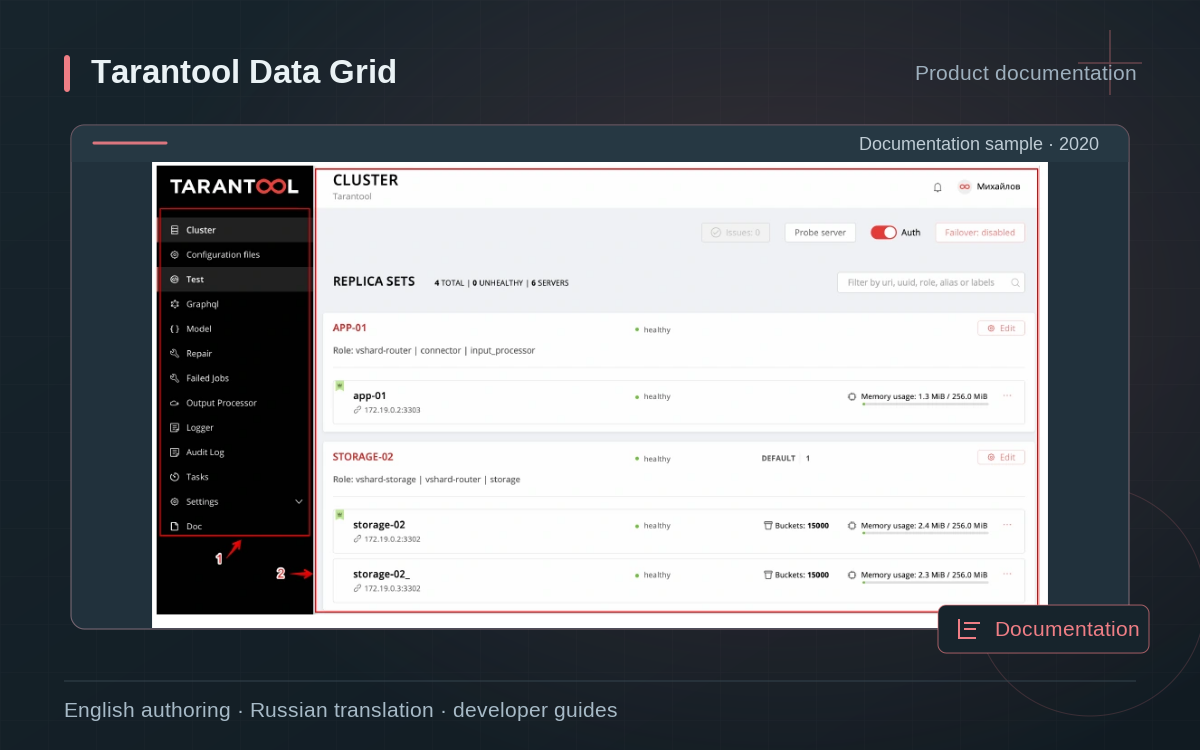
The gallery shows two complementary ways to make that material concrete: an annotated interface identifies navigation and cluster controls, while an Avro schema example supports the explanation of domain models. Writing in English and translating into Russian also required keeping the technical concepts and terminology consistent across both languages.
Examples
Explore the cluster interface
Inspect the annotated interface and navigation reference from the 2020 guide, p.43.
View the interface guide ExplanationUnderstand the domain model
Read the explanation of schema structure, objects and relationships from the 2020 guide, p.3.
Read the model explanationGallery