Product documentation
Charmed OpenSearch
Charmed OpenSearch is an open-source Juju operator that simplifies the deployment, scaling and management of OpenSearch clusters on physical hardware, VMs, and Kubernetes.
My roleTechnical Author, Canonical Data Platform
Product summary
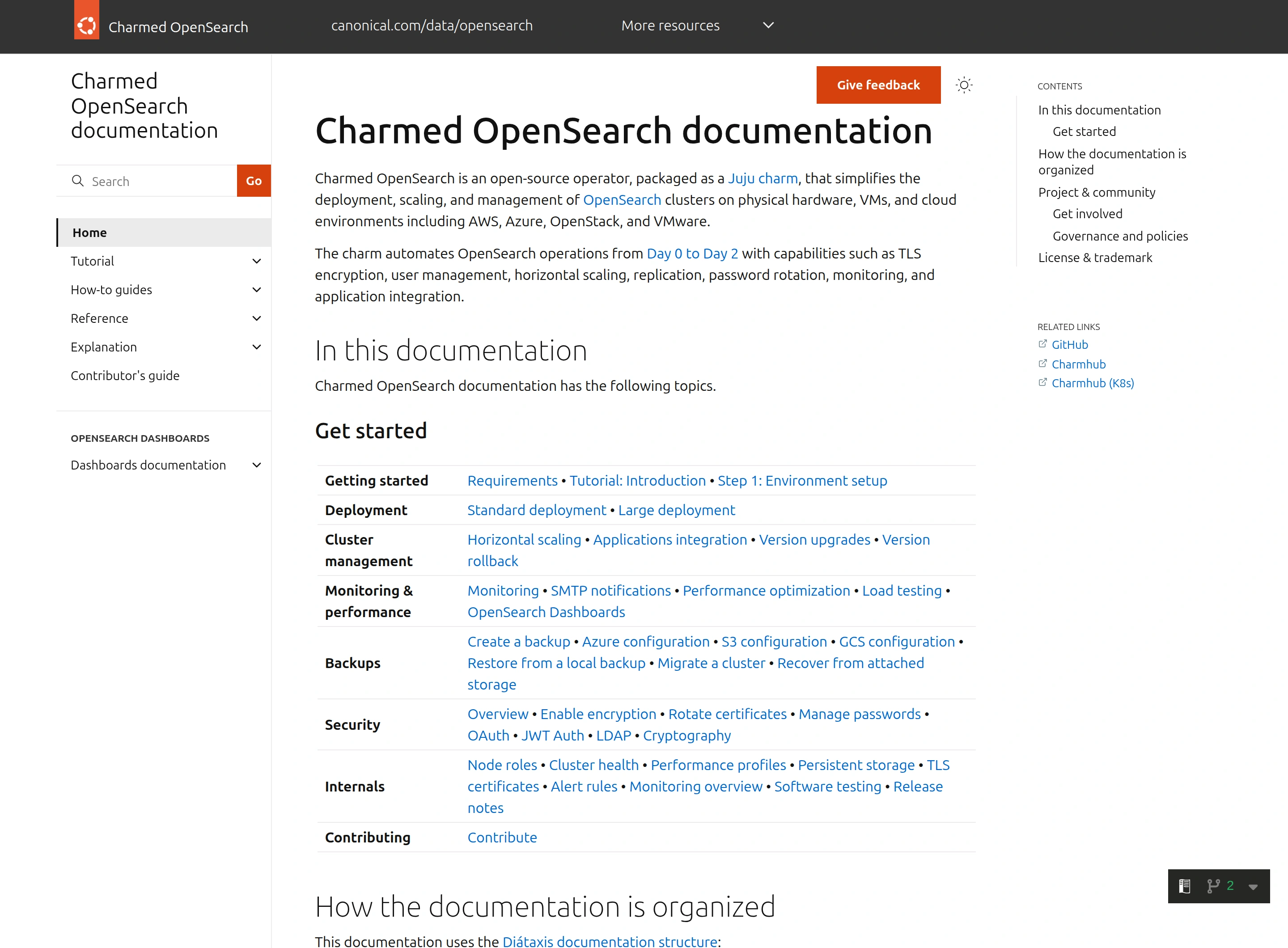
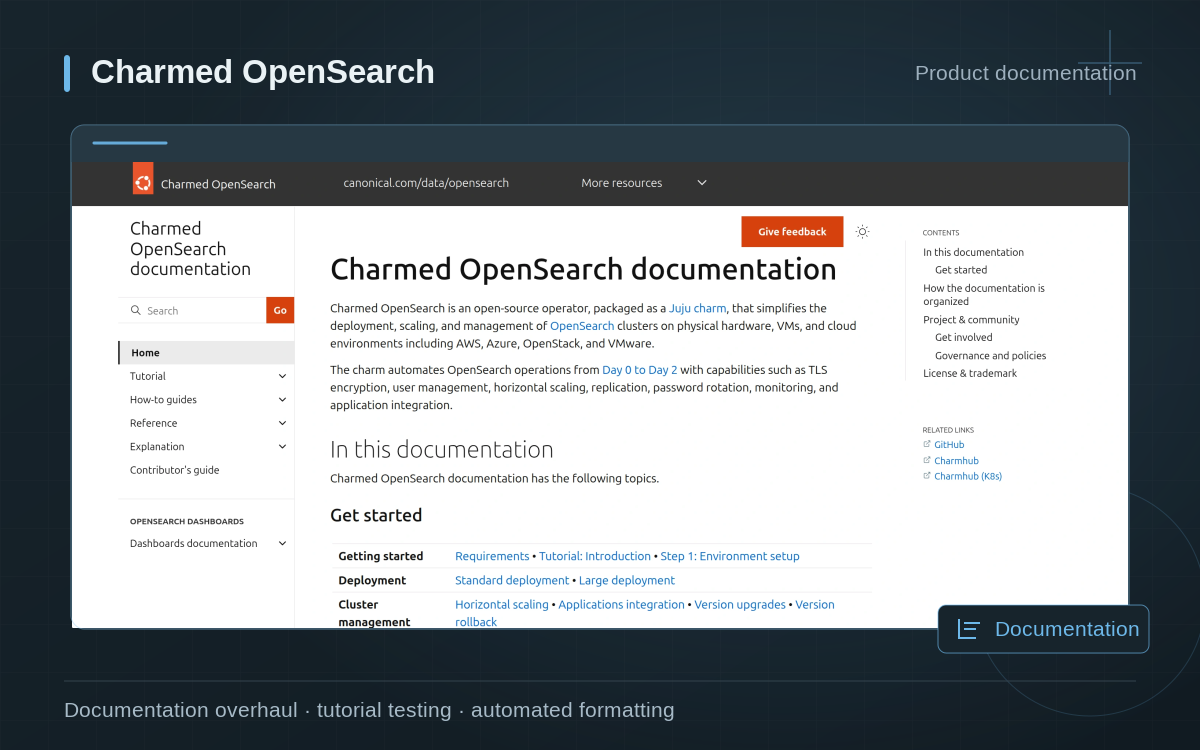
Charmed OpenSearch is an open-source operator, packaged as a Juju charm, that simplifies the deployment, scaling and management of OpenSearch clusters on physical hardware, VMs and cloud environments including AWS, Azure, OpenStack and VMware. The documentation covers both the machine charm and the Kubernetes charm.
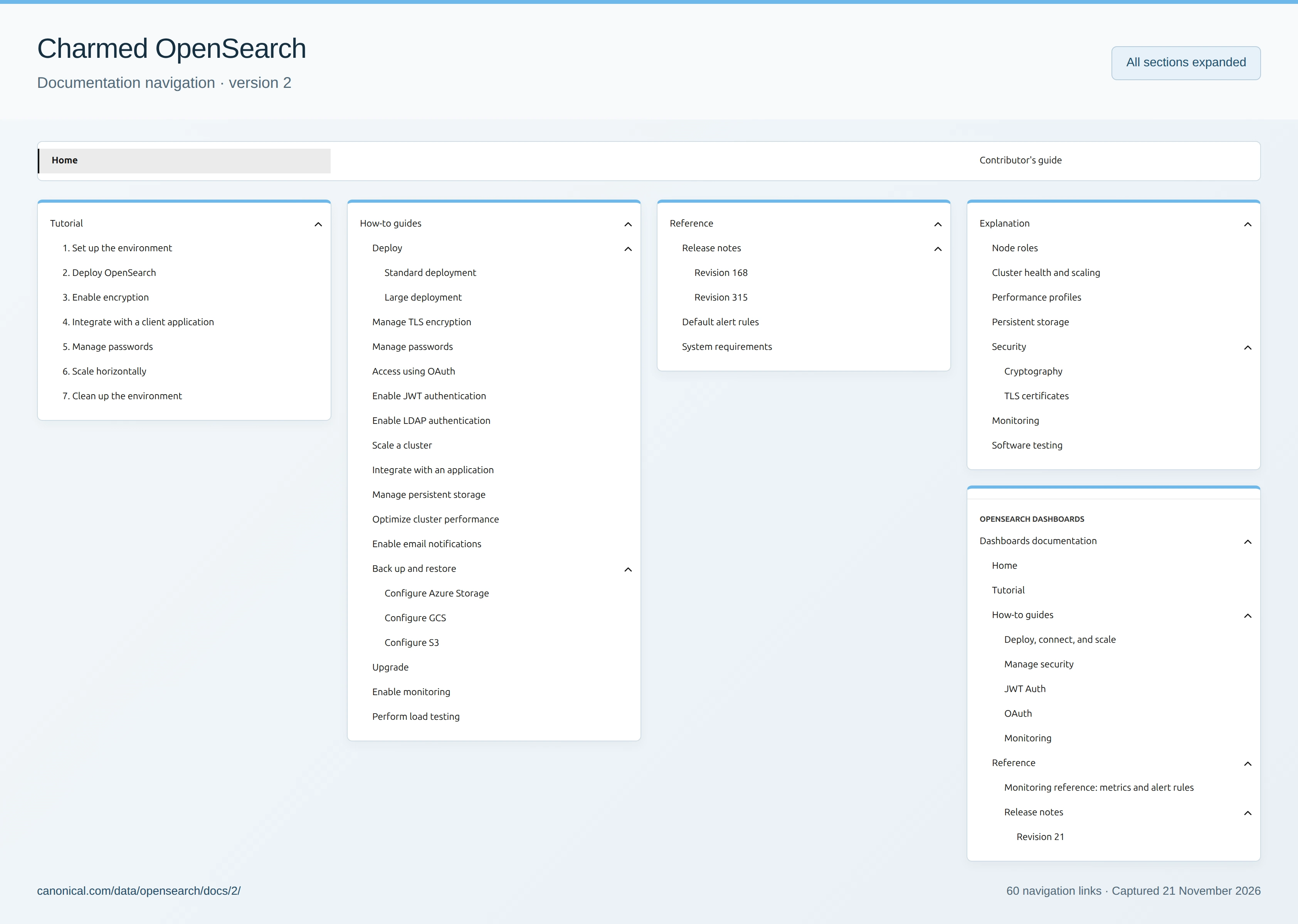
Like most of Canonical’s documentation, this documentation follows Diátaxis: a tutorial supports learning, how-to guides give practical instructions, reference pages provide technical details, and explanation pages develop understanding of core concepts.
My involvement
I’ve been responsible for all documentation for this product since 2025: managing our plans, standards and automation, as well as reviewing all content changes and writing new documents.
In addition to maintaining the documentation for all major versions, I maintain documentation automation, testing and publishing.
Main challenges
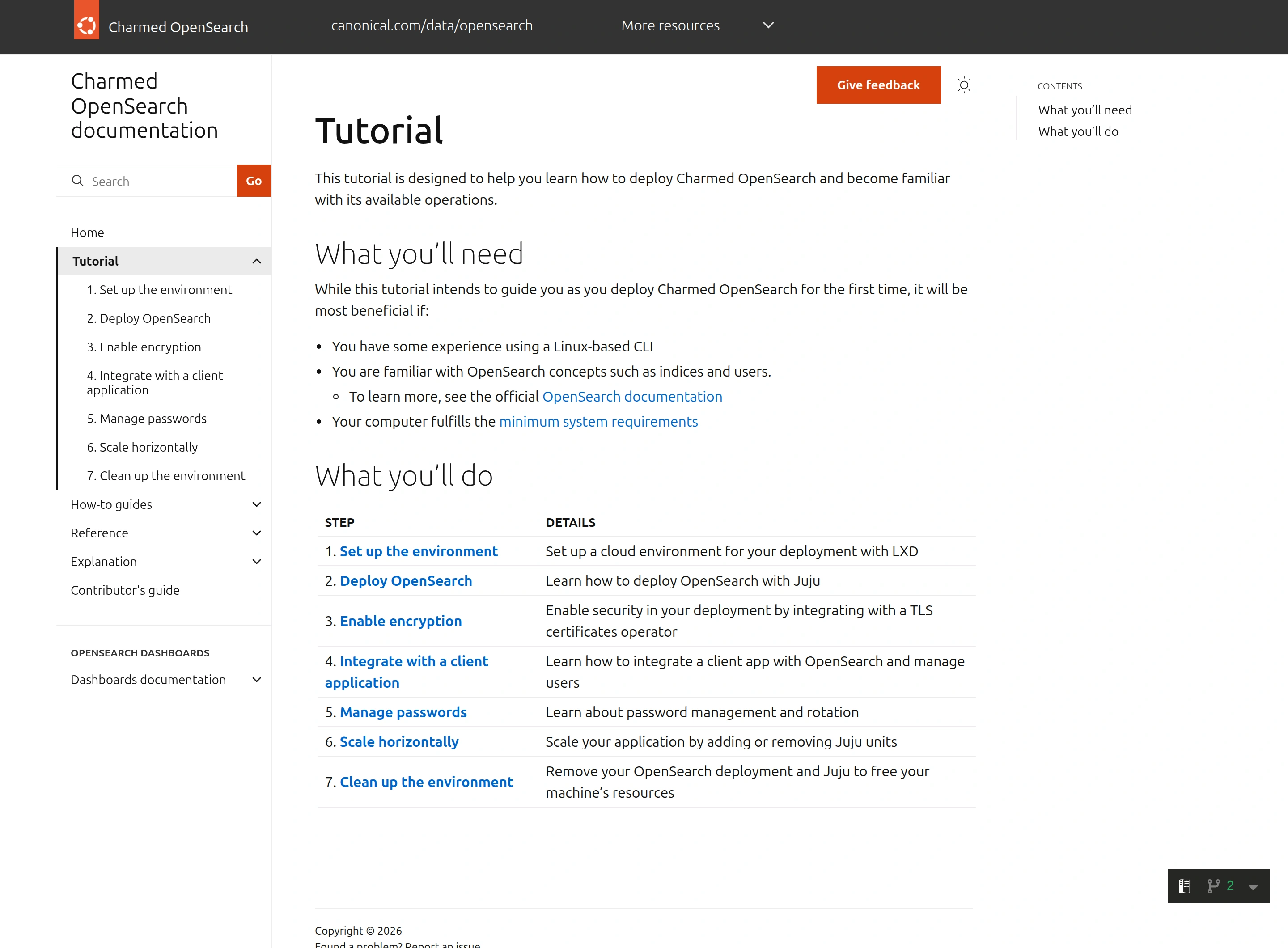
The product is very technical. The tutorial expects readers to have experience with a Linux command line and OpenSearch concepts such as indices and users. The documentation can therefore focus on the charm-specific work: deploying with Juju, enabling TLS, integrating applications and operating a cluster, without duplicating the upstream OpenSearch documentation.
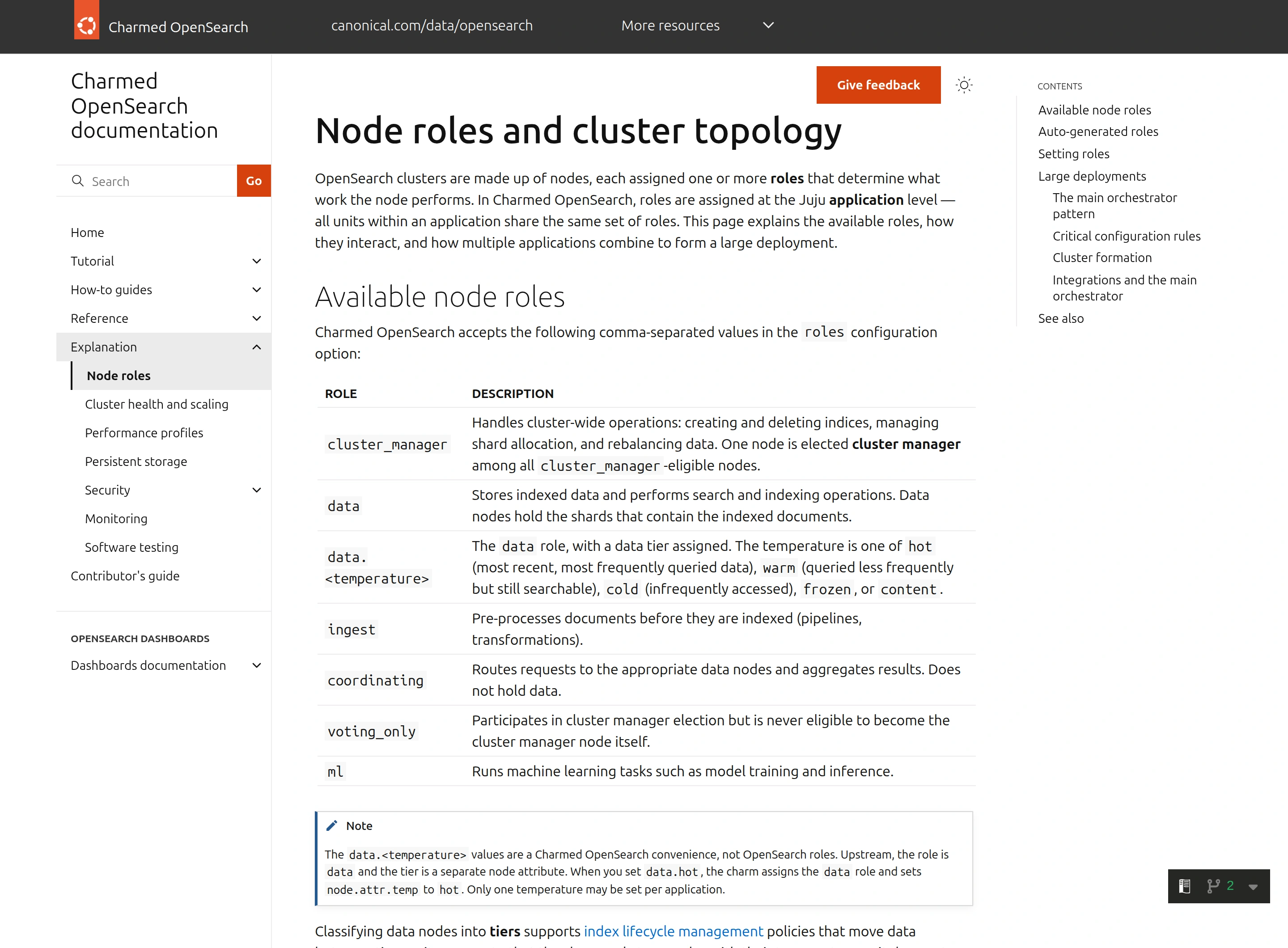
Working with the team, I restructured, rewrote and updated much of the existing documentation. This included revising deployment and operational guides and adding explanations of node roles, cluster health, performance profiles, storage and TLS certificates. The aim was to make the instructions clearer and give readers the context needed to understand configuration choices.
I also updated the tutorial and added automated testing so its instructions could be checked against a real deployment. The test workflow extracts commands from the tutorial and runs them with Spread in a Multipass VM, keeping the test tied to the documented procedure.
To keep the documentation sources consistent, I introduced automated Markdown formatting with MyST support, checked through pre-commit and CI. This makes formatting checks part of the contribution workflow, alongside reviewing the technical content.
Examples
Deploy your first OpenSearch cluster
Follow a guided sequence through deployment, encryption, client integration and scaling.
Start the tutorial How-to guideDeploy a standard cluster
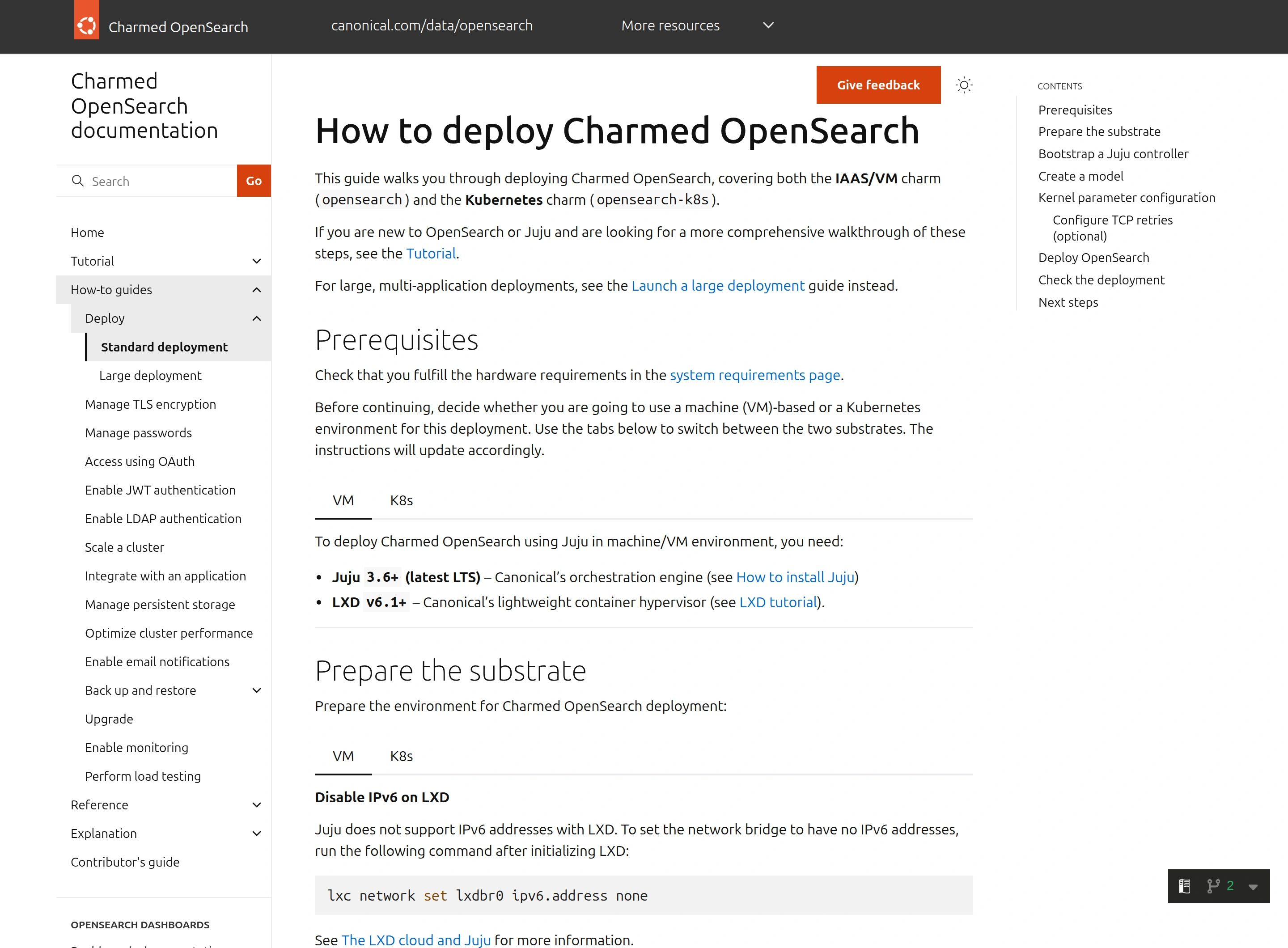
Prepare the substrate and deploy OpenSearch using the Juju CLI.
Read the deployment guide ReferenceCheck the system requirements
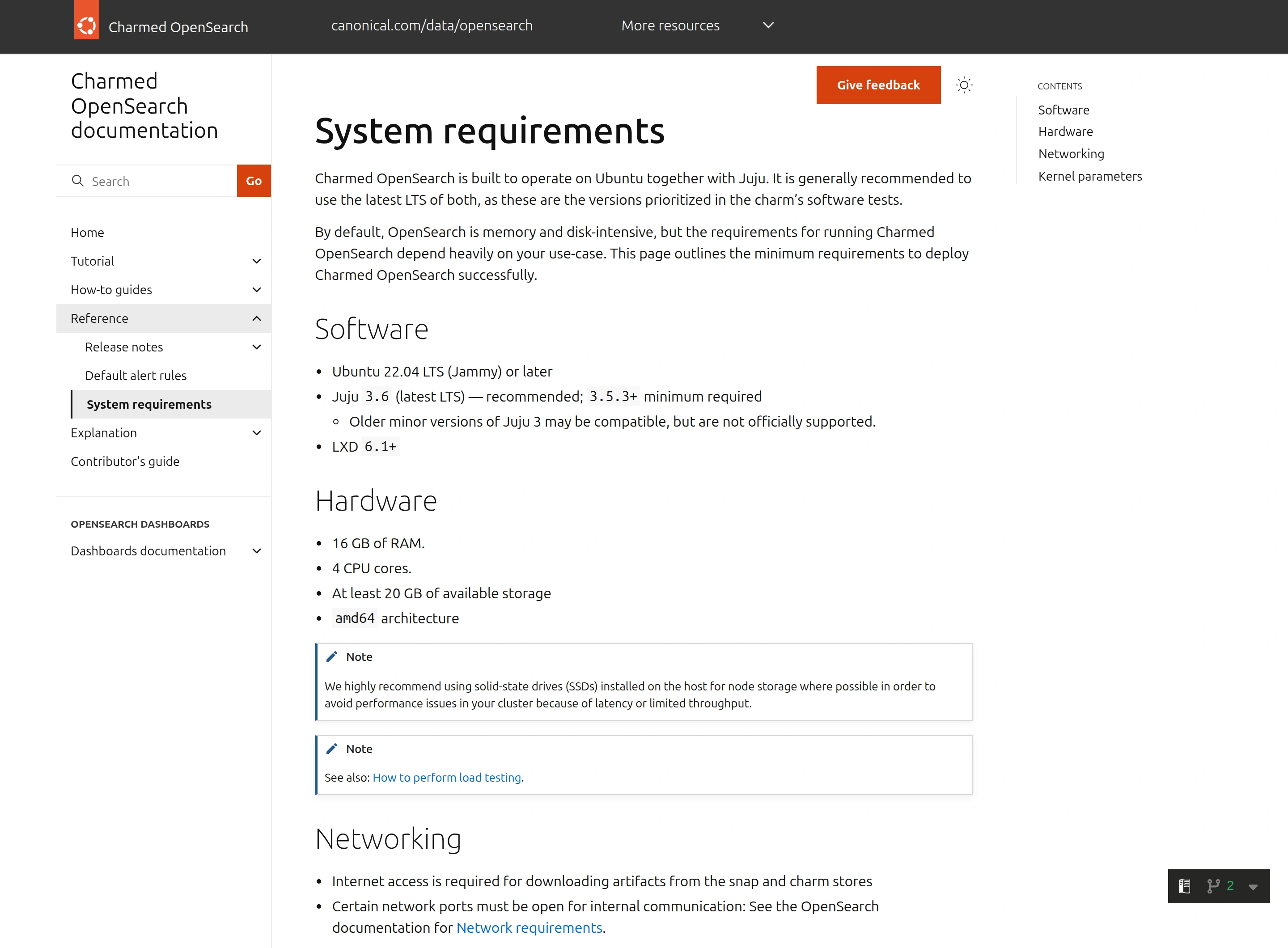
Look up the software, hardware, network and kernel requirements for a deployment.
Open the requirements ExplanationUnderstand node roles
Explore the roles of OpenSearch nodes and how they shape cluster topology.
Explore node rolesGallery