Product documentation
Charmed Apache Kafka
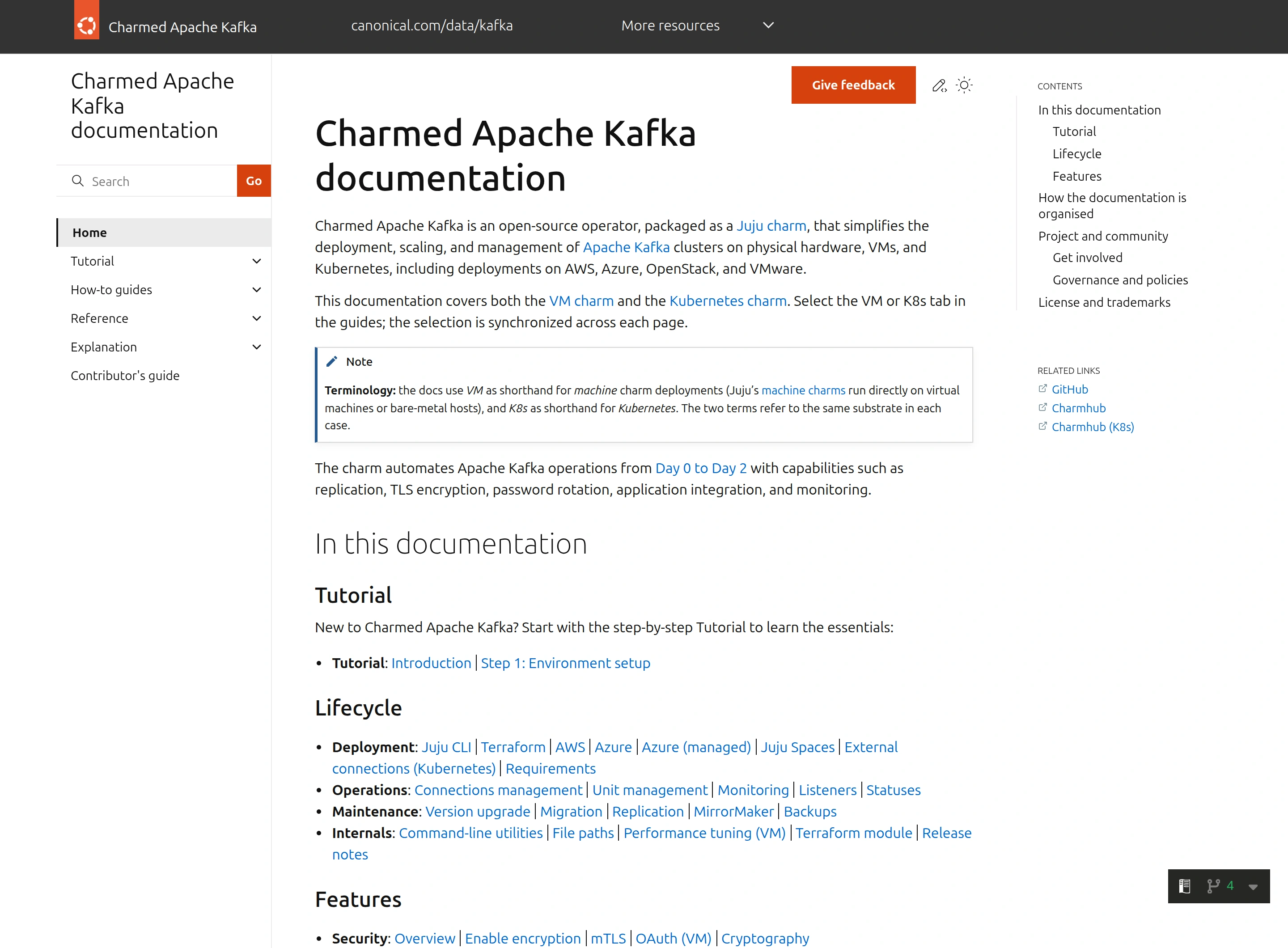
Charmed Apache Kafka is an open-source operator that simplifies the deployment, scaling, and management of Apache Kafka clusters on physical hardware, VMs, and Kubernetes.
My roleTechnical Author, Canonical Data Platform
Product summary
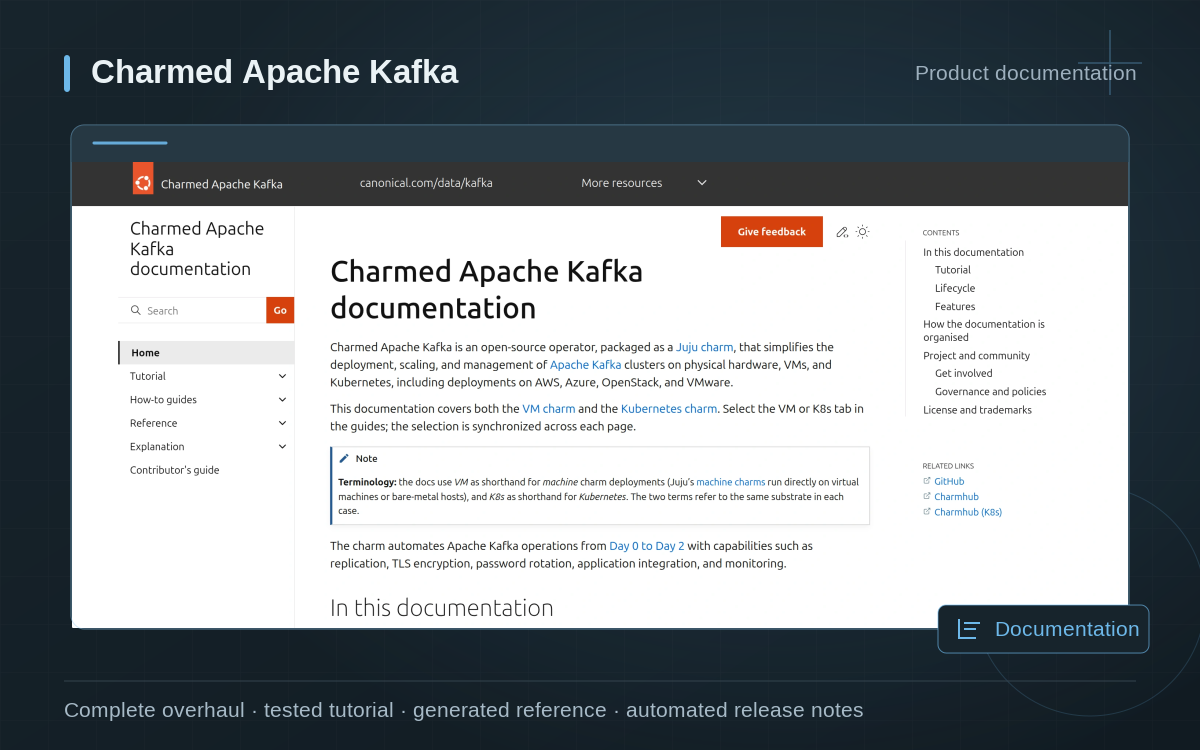
Charmed Apache Kafka is an open-source operator, packaged as a Juju charm, that simplifies the deployment, scaling, and management of Apache Kafka clusters on physical hardware, VMs, and Kubernetes, including deployments on AWS, Azure, OpenStack, and VMware.
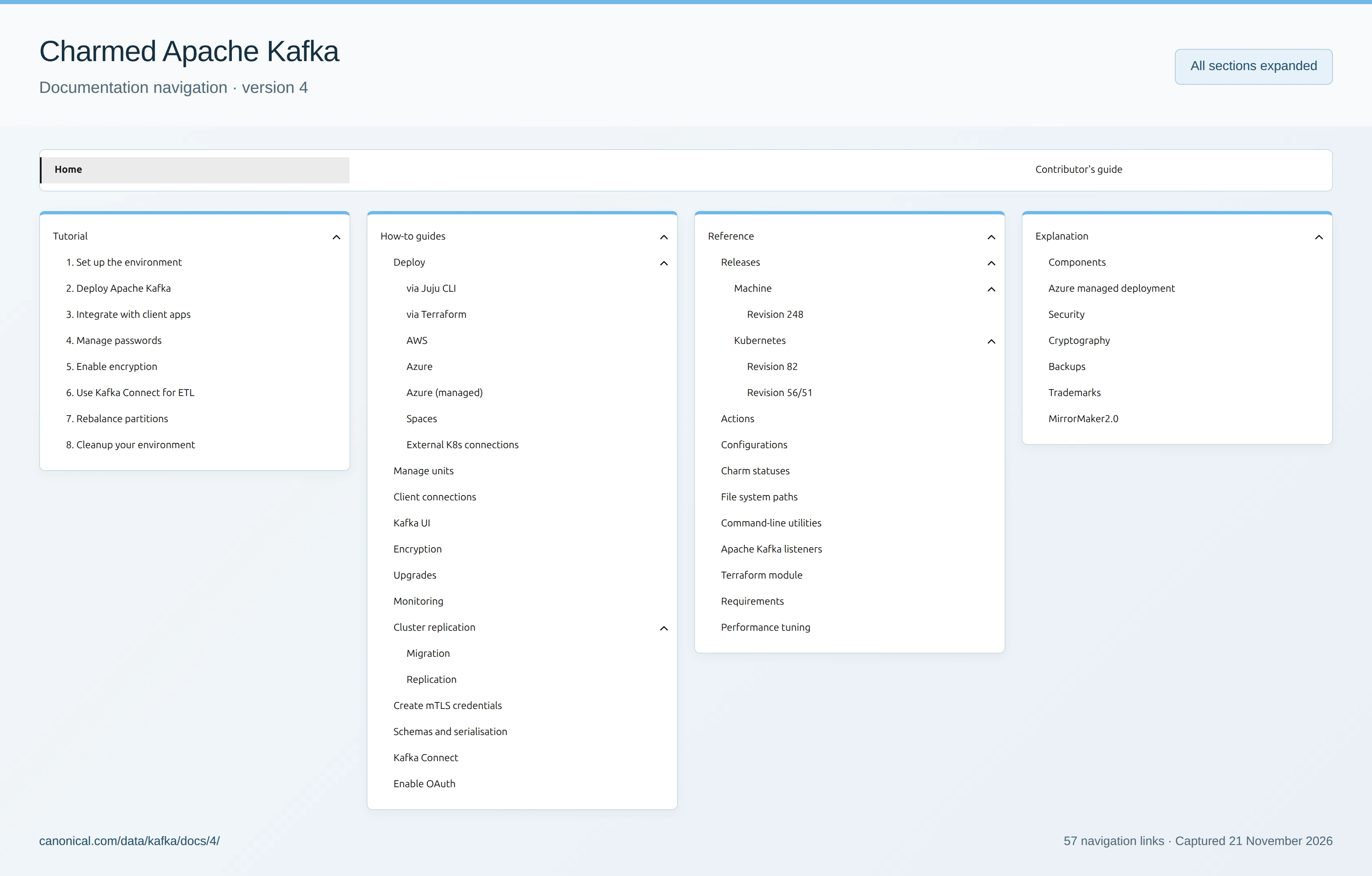
Like most of Canonical’s documentation, this documentation follows Diátaxis: a tutorial supports learning, how-to guides give practical instructions, reference pages provide technical details, and explanation pages develop understanding of core concepts.
My involvement
I joined the team in 2024 and I’m responsible for all documentation for this product: managing our plans, standards and automation, as well as reviewing all content changes and writing new documents.
In addition to maintaining the documentation for all major versions, I maintain documentation automation, testing and publishing.
Main challenges
The product is very technical, and we expect our target audience to already be familiar with both the Juju orchestrator and Apache Kafka. That way, we can concentrate on explaining only the product’s features without duplicating the upstream documentation for Apache Kafka and Juju.
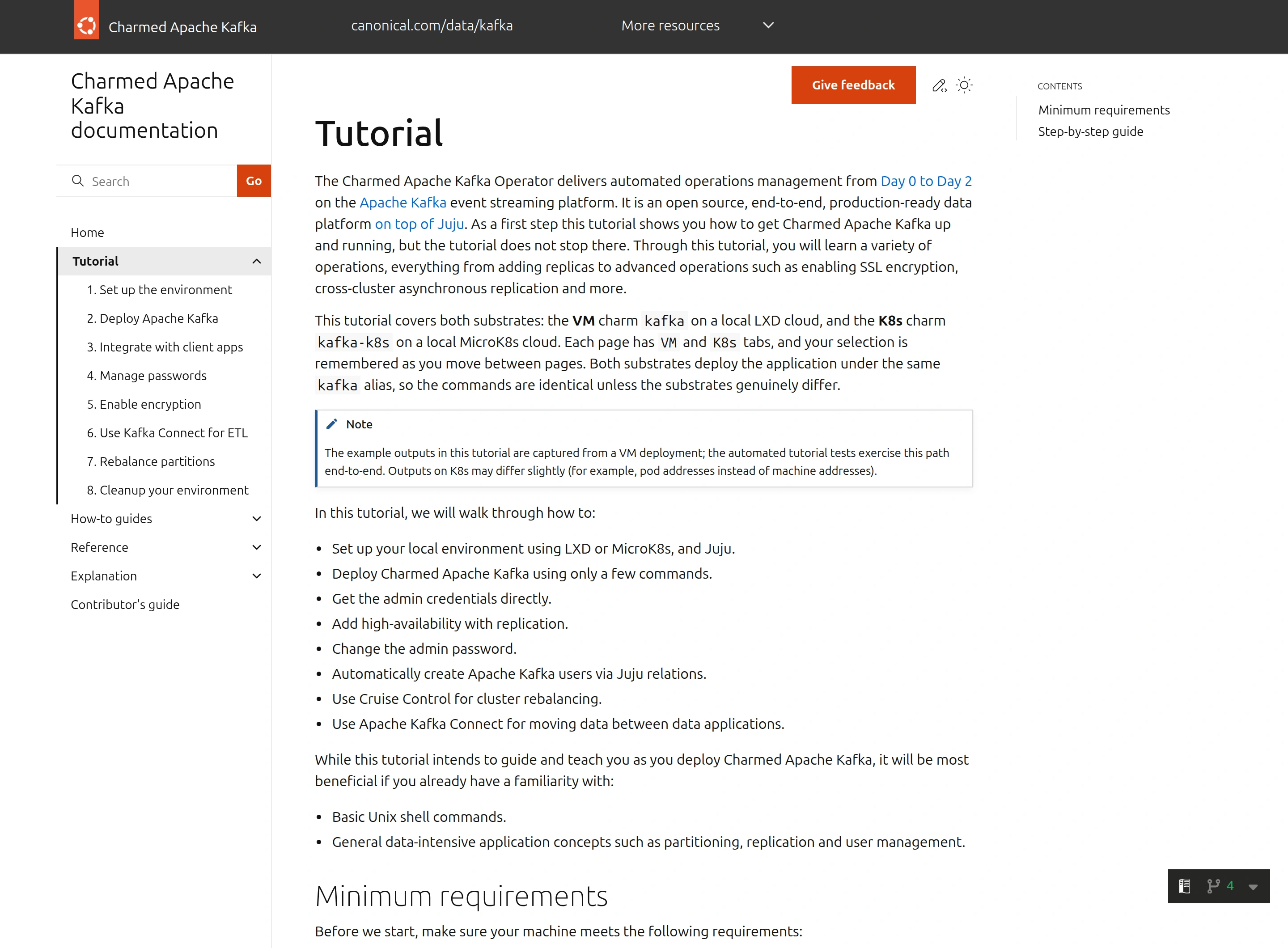
When I joined, I started by refactoring the existing documentation, written mostly by engineers, to improve clarity, trim unnecessary details and add missing content. After that, I recreated the tutorial to provide a smoother and more robust experience.
I then added automated testing for our tutorial to make sure it always stays correct. The test workflow extracts commands from the tutorial and runs them with Spread in a Multipass VM, keeping the test tied to the documented procedure.
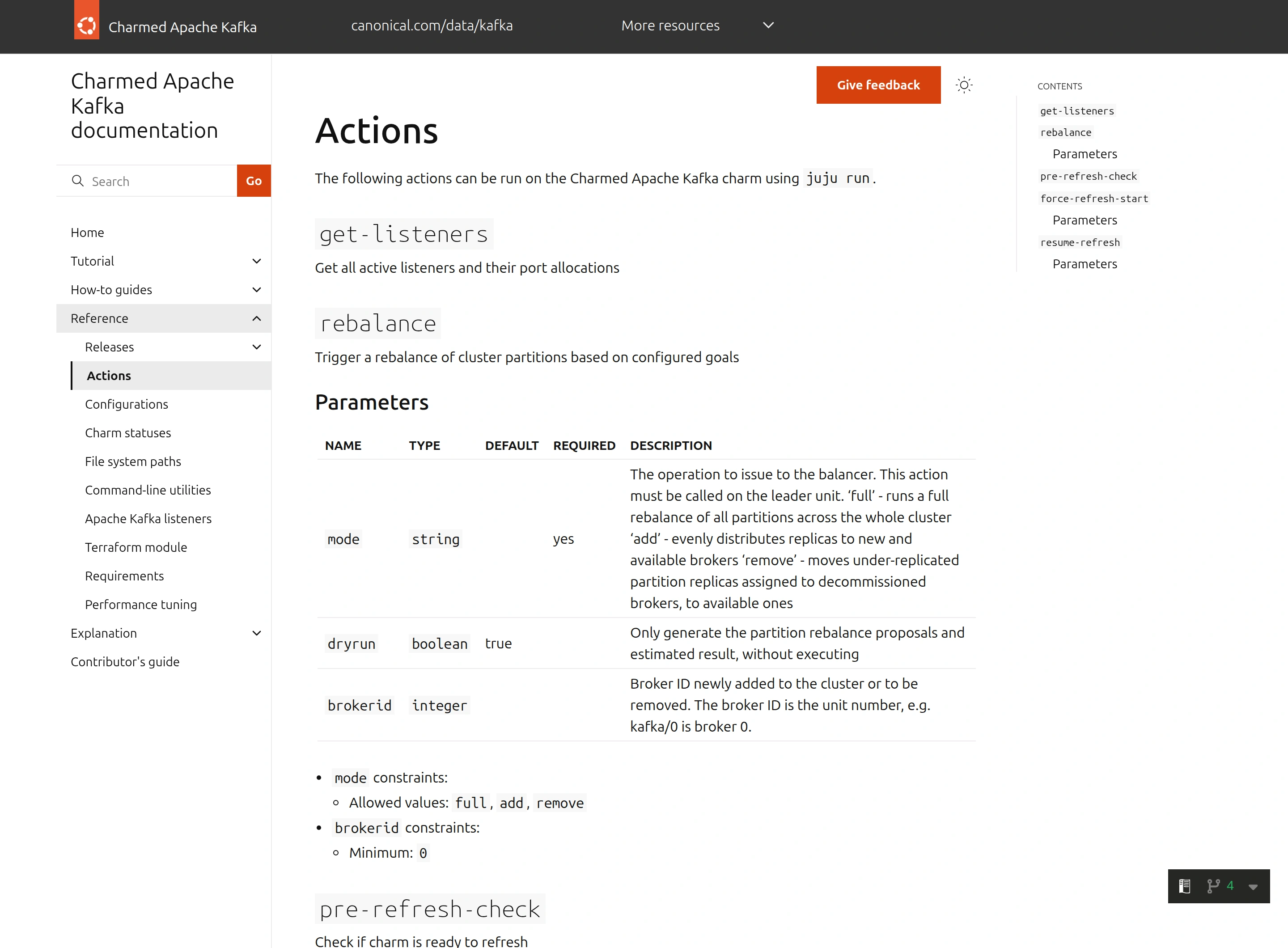
I also created a fully automated builder that generates reference documentation from source code at build time, for example: Actions, Configurations, Charm Statuses.
To keep the documentation sources consistent, I introduced automated Markdown formatting with MyST support, checked through pre-commit and CI. This makes formatting checks part of the contribution workflow, alongside reviewing the technical content.
Finally, I developed a mostly deterministic solution to generate our release notes, with particular attention to a strict factual basis drawn from the GitHub API and to formatting.
Examples
Deploy your first Kafka cluster
Follow the walkthrough I rebuilt, from environment setup to client integration and encryption.
Start the tutorial How-to guideDeploy via the Juju CLI
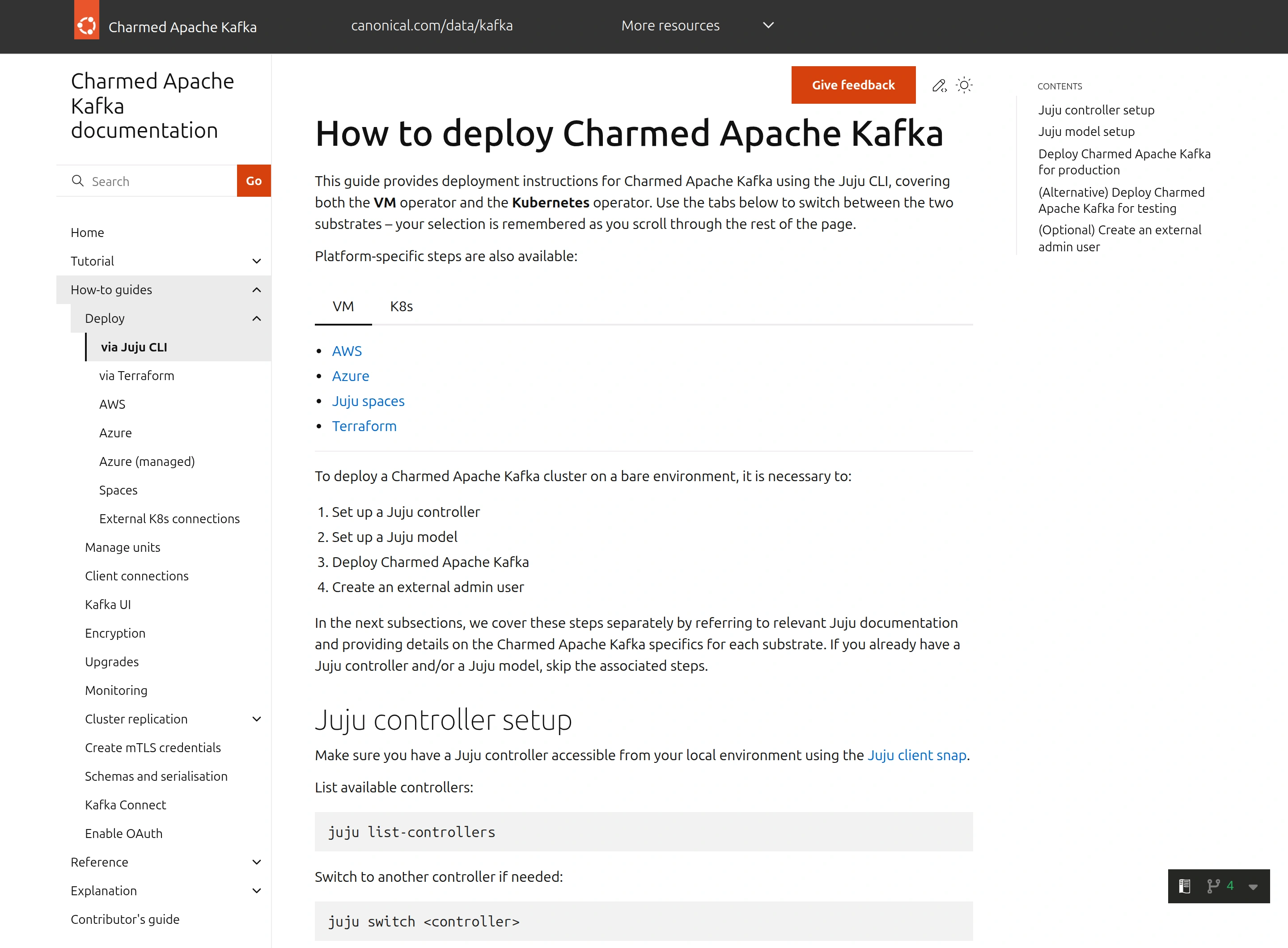
Set up a Juju controller and model, deploy Kafka, and configure administrator access.
Read the deployment guide ReferenceExplore the configuration options
Inspect a reference page built automatically from the operator's source code.
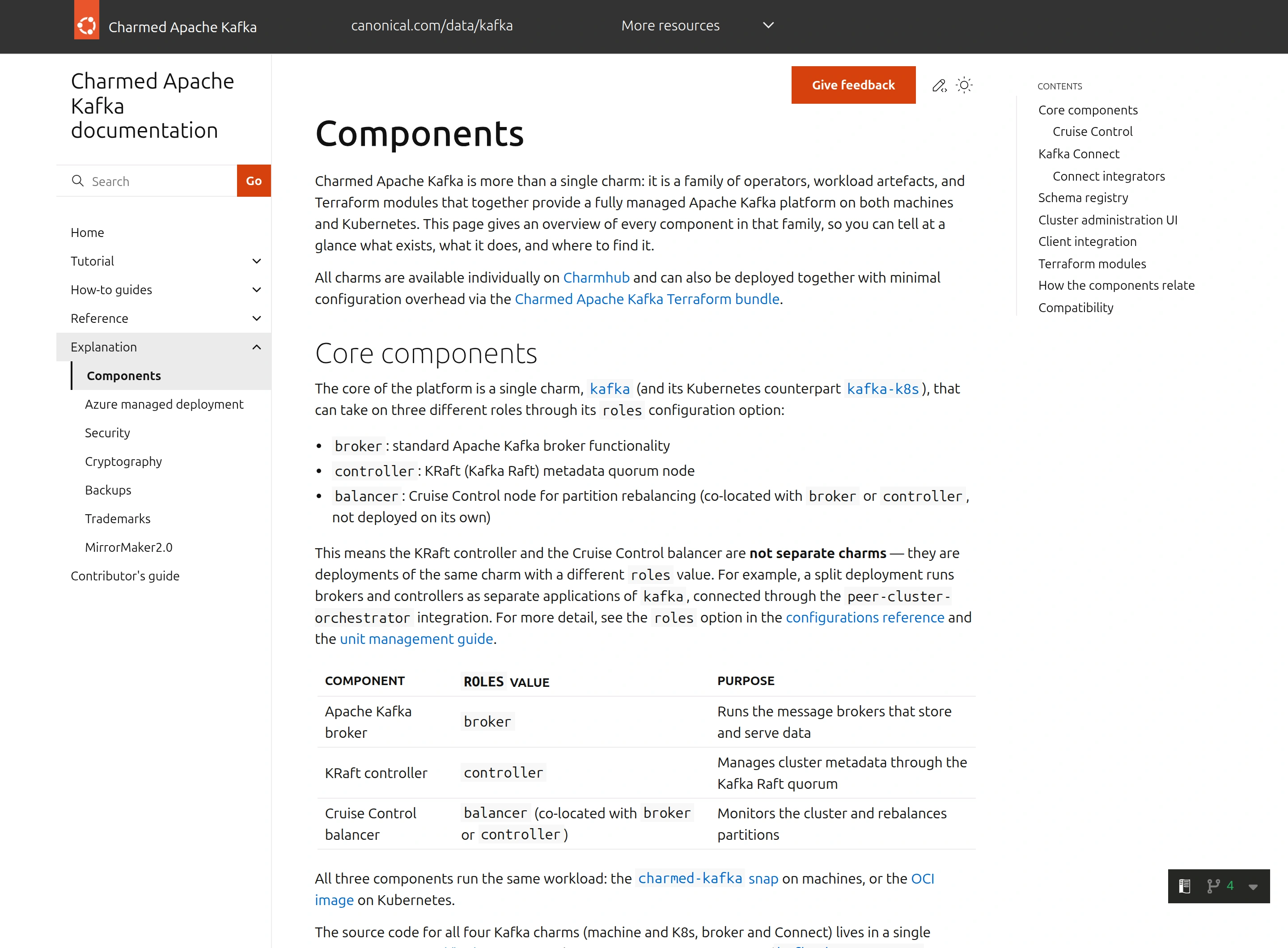
Open the reference ExplanationComponent overview
Understand the components of a Charmed Apache Kafka deployment and how they fit together.
Explore the componentsGallery